Wednesday, September 20, 2017

Grace Freeman - Shadow (2017)


Written by Stephen Bailey, posted by blog admin

Grace Freeman’s first solo collection Shadow includes eleven songs largely adhering to Americana and singer/songwriter influences while still taking opportunities to branch out at key points. The two primary instruments on Shadow are acoustic guitar and piano, but the six string is far and away the defining tool for bringing Freeman’s songs to sonic life. It is balanced against Freeman’s singing in a very artful and proportional way – one never gets the feeling that a choice to highlight any one element at the expense of another ever entered into the equations for recording this album. Instead, Shadow has bearing and a satisfying completeness that’s difficult to find in modern releases. Freeman may be very young, but her musical aesthetics and songwriting vision harken back to an earlier era and have mastered the sort of fundamentals required if the work is intended to endure.

It begins in a memorable way with the weighty statements of both “Oliver” and the title song “Shadow”. The former is the first of many acoustic guitar powered tracks and has a dark, mournful air surrounding its guitar work. Freeman’s voice doesn’t opt for doubling down on that mood and, instead, positions herself as a foil to the musical mood with ethereal vocals that will touch all but the most cynical listeners. The title song has a more forceful spirit thanks to welcoming drums and bass for the first time on the release, but Freeman exerts her vocal strength more here than we hear in the opener. “Trying to Say Goodbye” is, arguably, the most commercially minded tune on Shadow, but this isn’t an insult. Freeman approaches this sort of variation the same way she treats any other songwriting – her interests lie with recording the best possible performance rather than groveling for widespread attention.

“Blue-Eyed Boy” visits some of the aforementioned Americana roots you find after digging deep enough into Freeman’s core sound. Freeman delivers one of her most deeply felt vocals for this release and she effortlessly glides through the verses. We are back in nominally more modern settings with the song “Another Long Night” and there’s certainly quite a contrast between the near angelic vocal delivery and Freeman’s despairing lyrical content. It’s one of the album’s loneliest moments. The deliberate and slowly evolving melody of “Muddy Puddles” gives listeners a chance to focus on the song’s lyrical content and relax into the song’s seamless changes. Piano returns on the song “God Forbid” and her avowed influence from singer/songwriter Regina Spektor is obvious, but never painfully so. This remains recognizably Freeman’s song from beginning to end and the frame of reference established by the similarities only serves to make the track more familiar. Shadow is a personal and intensely creative journey that rewards the listener in every song.  

Tuesday, September 19, 2017

KALO - Wild Change (2017)


Written by Stephen Bailey, posted by blog admin

Wild Change is the fourth overall release from the Oklahoma-based power trio KALO and marks a new high point in the band’s songwriting and recording career. Led by vocalist and guitarist Bat-Or Kalo, the band has co-opted the sound of electric blues and other American forms like funk and R&B, filtered it through their own consciousness and experience, before re-emerging with tremendous individual flair that many of their contemporaries lack. This is never blues by the numbers. The eleven songs on Wild Change go far beyond merely hitting some customary genre marks – instead, KALO reinvents while paying proper deference to tradition. The band’s voluminous live experience and the bonds forged from touring together over countless miles no doubt contributes much to their presentation, but it’s equally clear that there are musical fireworks innate to this particular configuration and time has only deepened their explosive potential.

“One Mississippi”, “Isabel”, the title song, “Only Love”, and the album’s second to last track overall “Bad Girl” constitute the band’s most outright blues variants on the album. The first song opens Wild Change with a quasi-boogie that swings so hard it’s difficult to believe this lineup has only played together for a short time. The majority of KALO’s efforts in this area are devoted to blazing, loud, and dramatic blues rock originals like “Isabel”, “Wild Change”, and “Bad Girl”. Despite the assertive sound and instrumental attack on these songs, however, you never get the feeling that Kalo and her band mates are overplaying and weighing the material down with excessive baggage. The title track is propelled by a particularly biting, memorable guitar riff while “Bad Girl” underlines the atmosphere of live playing and spontaneity that hangs over the entire album. “Only Love” is the album’s sole concession to slow blues and is pulled off with a lot of credibility and immense stylishness.

KALO ventures off the blues path at key moments. “Upside Down” is an ultra confident strut of sorts with great horn arrangements mingling in very nicely with a more restrained instrumental performance than what we’ve yet heard from the musicians on this album. The later “Pay to Play” goes even further and drops some straight forward funk into the band’s mix. KALO never abandons the guitar entirely, despite its more orchestral role here, and comes brilliantly alive during the second half. “Smile and Blush” covers in part the band’s penchant for more muted, introspective point of view, but it isn’t, unlike the last song :”Calling All Dreamers”, an essentially solo performance. It is the most vulnerable moment on the release, but also the most inspiring and listeners will be grateful she has ended it on this note. Wild Change shows the continuing evolution of one of the nation’s best guitar driven acts, regardless of genre. KALO will likely build to even greater heights than before with this new release.

Wednesday, September 13, 2017

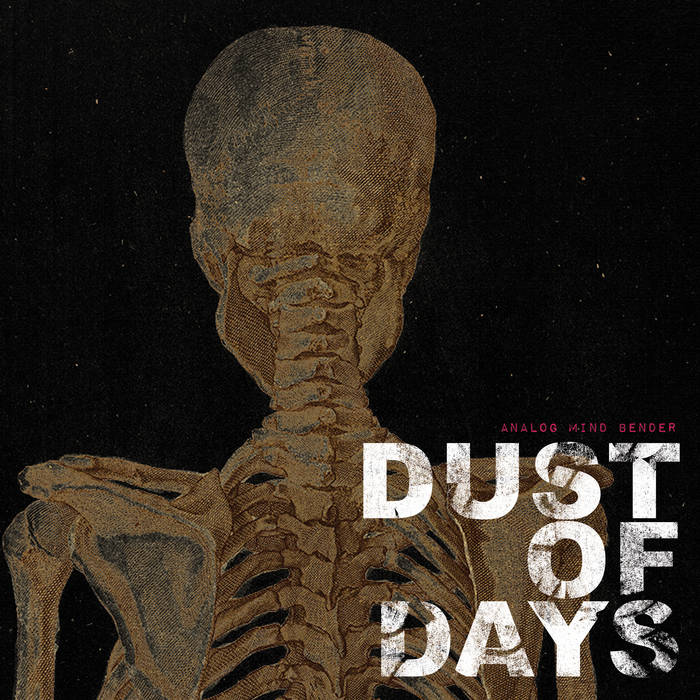
Dust of Days - Analog Mind Bender (2017)


Written by Craig Bowles, posted by blog admin

The fury conjured by New Jersey’s Dust of Days on their newest full length album Analog Mind Bender is balanced out against equally attention grabbing dynamics and expert contrasting of light and shadow. They aren’t afraid to confound your expectations and challenge you with textures a hundred and eighty degrees different from what you heard in the previous song. This is the hallmark of a band with the legs to carry them through long careers. Analog Mind Bender’s twelve songs are flush with rough and ready guitar, but Frank Lettieri Jr.’s songwriting raises this a few notches above the rebellious and brooding semi-juvenile spirit typically presiding over these sorts of efforts. Dust of Days makes rock music for adults who want some challenging subject matter and intelligence to come along with the thrashing riffs and bludgeoning rhythm sections.  If the band’s 2012 full length debut established them as a promising band to keep your ears open for, Analog Mind Bender solidifies and expands on that potential in enormous ways.

The title song kicks off the release and it is, arguably, one of the album’s “lighter” efforts musically. Make no mistake that the guitar punch present in Dust of Days’ music is quite real and present on every track, but “Analog Mind Bender” has some distinctive melodic touches that later songs lack. Lettieri’s vocals are impassioned, but he has a deceptive range and the ability to get the material over in a variety of ways. That’s illustrated quite nicely on the next song “Aurora” – Lettieri alternates between speaking and singing in an effective way that never seems too theatrical or a drag on the song’s energy level. There’s a harder edge present in this song, as well, that shows Dust of Days off as a fiery outfit while still emphasizing the solid, attention grabbing songwriting that Lettieri turns in one song after another. “Mustang” takes their talents in an entirely different direction as this number embraces a more clear-cut alternative rock feel than the first two songs. The emphasis on rampaging guitars is certainly less than before and Lettieri’s vocals are far more concerned with phrasing and emotive potential than they are in competing with a sonic storm raging all around. “Little Angel”, likewise, hails from a similar music lineage as the aforementioned tune, but the guitars are amped up much more here and regain the crunch they exhibited to open the album.

“Death Vibrations” is a sleeper track on the album that hopefully doesn’t get lost in the shuffle. It couples a streamlined and focused rock stride with notable punk rock tendencies and spirit to spectacular effect. Lettieri gives one of his best vocal performances on the album and you can really hear how intent he is on getting this song over with the listener. “Porcelain” is the album’s final moody quasi-ballad and the uncluttered texture of the song gives performer and listener alike plenty of room to allow their imaginations to meander and fill in the spaces within the composition. “Ghosts” closes Dust of Days’ Analog Mind Bender on a challenging note. The song is split into two halves – the first part is a brief acoustic track colored in a darker hue than anything else on the album and the longer second part is more electronic in nature while still retaining the same glowering intensity of the first half. You won’t hear many albums in this musical vein capable of surprising you as much as Dust of Days’ latest release. Analog Mind Bender definitely deserves being mentioned among the best albums of 2017.

Tuesday, September 5, 2017

Chris Murphy - Hard Bargain (2017)


VIDEO: (“Cape Horn”) http://chrismurphymusic.com/video/

Written by Raymond Burris, posted by blog admin

The musical and personal experiences of a lifetime coupled with sharp skills and the discipline to do what it takes to create and get his music out there defines Chris Murphy’s artistic journey. It’s a trip that’s carried him from his New York City beginnings to the sunny climes of Southern California, appearances on television and film, and a growing discography of original compositions that, frankly, entitles him to consideration among the nation’s best songwriters. The latest release Hard Bargain was recorded in front of a live audience and it’s obvious from the start that Murphy drew a very live, enthusiastic audience for these songs. The songs are, uniformly, quite excellent. Murphy is one of the rare talents who can revisit familiar musical vehicles and appropriate the language of traditional music without sounding like a hamfisted dilettante. He comes across as the real deal here, without question, one man holding an audience spellbound with his voice, words, and precious little instrumentation.

The title song is the first moment that leaves a mark on listeners. The song has a very simple structure and Murphy lights it up with his tale of bad luck and woe . It draws deeply from the blues tradition and Murphy nails those time-honored changes with head-down energy that sparks the audience to life. “Ain’t No Place” and “Bugs Salcido” temper the mood considerably. The first track is a gospel influenced number that inspires Murphy to a soulful instrumental and vocal performance. This is a near perfect example of how Murphy sounds utterly convincing adopting the language and tropes of traditional music – this song could easily be confused with a half dozen fine gospel numbers from the early 20th century and its obvious Murphy knows his stuff, but he never makes a great show of those moments and always uses them in clearly personal contexts where they assume added resonance.

“Holcombe Creek” definitely pursues a more Appalachian style and has an intensely cinematic quality in its violin playing common to Murphy’s best work. “White Noise” and “Last Bridge” are high points on the album thanks to their accessibility – rarely has Murphy written such undeniable hooks for his songs and they hang together so well that they are pleasures to hear from first note to last. Murphy seems to sense this, as well, and delivers one of his most inspired vocals on Hard Bargain with his turn on “Last Bridge”. “Trust” is another gut wrenching number with a mood ranging from despairing to stormy. Murphy really understands how to pare his musical and songwriting language down to the essentials to really get to the heart of what he wants to say. Things don’t noticeably brighten with the finale “Friend” but a close listener will take heart from the fact that the “I” behind all these songs is searching, never throwing in the towel, engaged with life. These songs are engaged with life – they examine how we spend our days alive without sparing punches and treating us to a dramatic musical experience. Hard Bargain is an often searing musical journey you won’t regret taking.   

Monday, September 4, 2017

Thunderbolt and Lightfoot - Songs for Mixed Company (2017)


Written by Daniel Boyer, posted by blog admin

Phil Barry and Sarah Fuerst, under the banner of Thunderbolt and Lightfoot, has released a well-received self-titled debut EP and Songs for Mixed Company marks their first foray into full length album territory. The ten song collection is nominally labeled as folk, but such labels only tell some of the story. The duo also liberally indulge and experiment with other textures, primarily Americana rock, and their music makes frequent use of additional elements like organ and, even more improbably, Mellotron. Despite this occasional stretching of stylistic boundaries, however, the subject matter remains resolutely tethered to earth and falls well within the wheelhouse of the folk or singer/songwriter style. The two musical elements ranking most important on this release are, easily, the confluence of Barry and Fuerst’s voices working alongside Barry’s stellar guitar work, but organ player Mike Lynch certainly offers a lot along the way thanks to the measured and colorful touches he adds to the mix.

“Let’s Be Friends” introduces us to the duo’s first full length in superb fashion. Phil Barry’s acoustic guitar work doesn’t spark with a lot of pyrotechnic flash; instead, we clearly hear that his playing focus is resolutely locked on summoning up understated lyricism that complements the vocals and lyrical content. The guitar’s mood dovetails quite well into the lyrical subject matter. “Miss You” does a memorable job of revisiting some popular classic country music tropes without ever lapsing into imitation and these reference points make for a richer music experience. There’s a little steel guitar tossed in for good measure, but in the manner of writers and performers who understand a little goes a long way, Thunderbolt and Lightfoot never give us too much of a good thing. The Mellotron is used to great effect on the song “Can’t Be Trusted” and it thickens the melancholy mood of this character piece largely dominated by Barry’s vocals. Fuerst is never far away, however, and her second voice added to the mix gives the song an even more meditative air.

“Sad Song” brings a number of musical elements to bear. This is, arguably, the album’s most “arranged” number and the presence of keyboards and strings in the song gives it a quasi-orchestral feel missing from much of the album. “Year of the Monkey” has a stately mid-tempo pace punctuated by steady drumming and gently simmering organ lines in the background. Barry and Fuerst deliver another impressive co-vocal with Barry’s voice leading the way, but make no mistake – these tunes would be far less effective without Fuerst’s voice to balance out his own. Their cover of Bruce Springsteen’s 1984 hit “I’m on Fire” isn’t an entirely outside the box selection – many artists have turned their attentions to this tune – but Thunderbolt and Lightfoot own this underrated Springsteen classic in a way earlier covers do not. The understatement they bring to this song about desire is admirable and the song’s mood fits in perfectly with the other nine songs on this release. Songs for Mixed Company is a resounding success for this duo and further solidifies that they are one of the pre-eminent Americana/folk outfits working today.

Yam Haus - Stargazer (2018)

OFFICIAL : http://www.yamhaus.com/ FACEBOOK: https://www. facebook.com/yamhaus TWITTER: https://twitter.com/YAMHAUSBand Writt...